

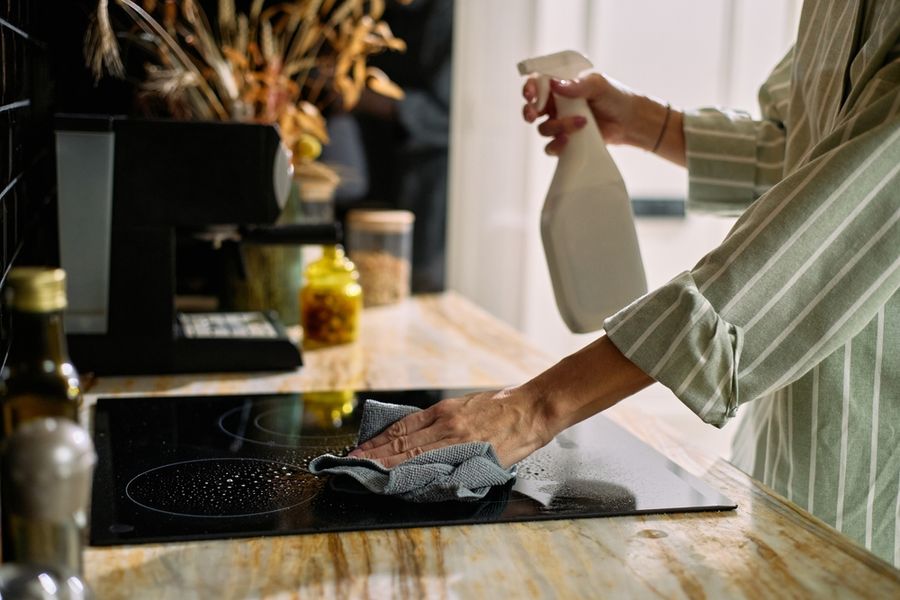
Few kitchen tasks feel as satisfying as a clean stovetop, and few feel as frustrating as one that won't come clean. Grease, splatters, and burnt-on food build up faster than most homeowners expect, and the wrong cleaning approach can leave permanent scratches or dull patches. The right tools, the right cleaners, and a method matched to your specific stovetop can lift even the worst buildup without damaging the surface underneath.
Know Your Stovetop Type First
The right cleaning method depends entirely on what kind of stovetop you have. Glass-ceramic cooktops, including induction cooktops with glass tops, are smooth, pretty, and easy to scratch with the wrong tools.
Gas stoves have removable grates and burner caps that need separate attention. Electric coil stoves have liftable drip pans underneath the burners. Each type calls for different supplies, different soaking strategies, and different precautions, so identify yours before reaching for any cleaner.
The Right Tools and Cleaners
Most stovetop grease can be removed with a few staples: a microfiber cloth, dish soap, white vinegar, baking soda, and warm water. For glass-ceramic surfaces, add a specialty cleaner like Cerama Bryte or Weiman Cooktop Cleaner and a manufacturer-approved razor scraper.
For gas grates, a sturdy nylon brush or non-scratch scrub pad helps work into the corners. Avoid steel wool, scouring pads, abrasive powders, and aggressive multi-surface sprays that can dull or scratch many cooktops.
How to Clean a Glass-Ceramic Cooktop
Glass-ceramic cooktops require the most careful handling because they scratch easily. Whirlpool's cooktop care guidance recommends letting the surface cool, then spraying it with white vinegar to dissolve light grease.
Sprinkle baking soda over the vinegar and lay a hot, damp towel on top for 10 to 15 minutes. The reaction loosens grease without abrasion. Wipe away the residue with a microfiber cloth, then buff with a specialty glass cooktop cleaner. For burnt-on food, use only a manufacturer-recommended razor scraper held at a low angle, never a kitchen knife or metal utensil. Keep the surface still slightly warm to the touch but not hot, since warm residue lifts more easily than cold.
How to Clean a Gas Stovetop and Grates
Gas stovetops include the cooking surface itself plus removable grates and burner caps. KitchenAid recommends removing grates and burner caps and soaking them in hot, soapy water for at least 20 minutes for routine cleaning, or several hours to overnight for serious buildup.
For coated cast iron grates, soaking is fine, but bare cast iron should be wiped clean rather than submerged to prevent rust. Wipe the cooking surface itself with warm, soapy water and a soft cloth. For stubborn grease, a paste of baking soda and water lifts most splatters without scratching. Make sure to dry burner caps and grates completely before reassembling, since standing water can corrode the metal and clog the burner ports underneath, leading to uneven flames.
How to Clean Electric Coil Stovetops
Electric coil stovetops have removable burners and drip pans underneath. Lift the coils carefully and never submerge them in water, since the electrical connection can be damaged. Wipe coils with a damp, soapy cloth, then dry thoroughly.
The metal drip pans below can be soaked in hot, soapy water to remove grease. For heavy buildup, scrub gently with a baking soda paste. Replace drip pans entirely if they're badly stained, since they're inexpensive and replacements look brand new.
Tackling Burnt-On Grease
Keep in mind, the longer grease sits and gets cooked onto a surface, the harder it is to remove. For glass-ceramic, lay a hot, damp microfiber cloth over the spill for 15 to 30 minutes to soften the residue, then carefully scrape with a razor scraper at a 45-degree angle.
For gas grates, soaking overnight in a sealed bag with ammonia (and no other chemicals) breaks down most stubborn carbon. Always rinse thoroughly afterward and never inhale the fumes directly.
What to Avoid at All Costs
A few common cleaning shortcuts cause permanent damage. Magic Erasers can dull glass-ceramic finishes over time. Steel wool and abrasive scouring pads scratch nearly every stovetop surface. Bleach and strong oven cleaners can discolor stainless steel control panels and harm finishes around the burners.
Never use cold water on a hot cooktop, which can crack the glass instantly. And never mix vinegar with bleach or ammonia with bleach, both of which produce toxic fumes that are dangerous in the small space of a kitchen.
Daily and Weekly Maintenance
The easiest way to handle stovetop grease is to never let it pile up. Wipe spills with a damp cloth as soon as the cooktop is cool enough to touch. Once a week, do a deeper clean using soapy water and microfiber.
Once a month, soak gas grates or replace electric drip pans as needed. Every few months, deep clean the entire stove area, including the wall behind it and the range hood filter, where grease tends to collect unnoticed. Splatters that haven't been baked into place are far easier to remove than the ones that have, and a quick wipe after dinner saves an hour of scrubbing later.
A Stovetop That Looks Like New
A clean stovetop makes the whole kitchen look better and cooks more evenly, too. With the right cleaners, the right scraper, and a routine that catches messes early, even the most stubborn grease can be removed without damaging the surface.
The first deep clean takes some effort, but ongoing maintenance becomes a few minutes here and there rather than an afternoon project. The result is a stove that looks better, lasts longer, and works the way it should every time you cook.