

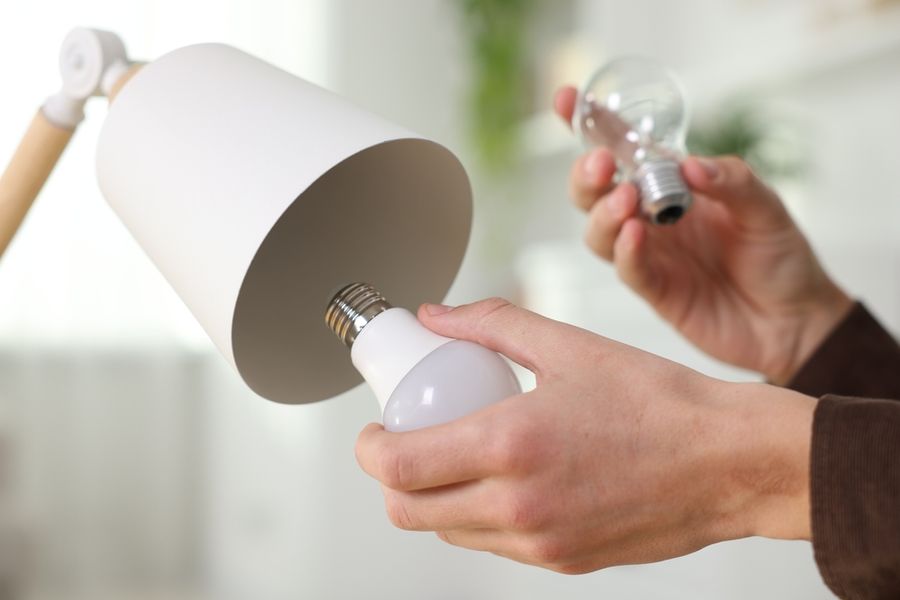
Lighting is one of the most overlooked elements in home design, but it has more impact on how a room feels than almost anything else. Even the most beautiful furniture and finishes fall flat under harsh, dated, or insufficient lighting. The good news is that most lighting mistakes can be fixed without major renovation. A handful of simple changes can transform a dim, dated space into one that feels warm and current.
Relying on a Single Overhead Fixture
The single biggest lighting mistake in most homes is relying on one ceiling fixture to light an entire room. Most experts recommend layering three types of light: ambient, task, and accent. Ambient is the general illumination, often from overhead.
Task is focused light for specific activities like reading, cooking, or grooming. Accent, on the other hand, draws attention to art, plants, or architectural features. A room with only ambient lighting feels flat and uninviting, no matter how well it's furnished.
Skipping Lamps Entirely
Floor and table lamps are the easiest way to add immediate warmth and depth to a room, yet many homes have just an overhead and call it done. Even a couple of small lamps placed at varied heights instantly soften the space.
A floor lamp in a dim corner, a pair of matching table lamps on either side of a sofa, and a small task lamp on a desk or side table work together to make a room feel more lived in. Most lamps are also far more flattering than light beaming straight down from above.
Choosing the Wrong Color Temperature
Cool, blue-tinged lighting is one of the fastest ways to make a home feel sterile. ENERGY STAR notes that bulbs in the 2,200 to 3,000 Kelvin range produce a warm, yellow-toned light similar to incandescent bulbs, while bulbs at 5,000 Kelvin or higher cast a much cooler, bluer light.
For most living spaces and bedrooms, aim for 2,700 to 3,000 Kelvin. Kitchens, bathrooms, and home offices can handle slightly cooler 3,500 to 4,000 Kelvin bulbs for better visibility, but anything above 4,000 Kelvin tends to feel harsh in a residential setting.
The Dreaded Boob Light
The flush-mount dome fixture, often called the "boob light" is one of the most universal markers of a dated home. These ubiquitous, frosted-glass domes were installed by the millions in spec homes from the 1990s through the 2010s.
They cast harsh, unflattering light that traps dust and bugs, and add nothing to the architecture. Replacing them with a cleaner-lined flush mount, a small chandelier, a semi-flush fixture, or even a simple drum pendant is one of the most cost-effective lighting upgrades in any home.
Forgetting Dimmers
Dimmers are one of the cheapest ways to dramatically improve the lighting in any room. They let you dial brightness up for tasks and down for relaxing, which is the whole point of layered lighting.
Smart dimmers can also adjust color temperature throughout the day, mimicking daylight when you need to be alert and warming up to firelight tones in the evening. Adding dimmers to existing overhead fixtures is usually a 30-minute project, and the difference in mood is immediate.
Wrong-Sized Fixtures for the Room
A common mistake is hanging a tiny fixture in a large room or installing a too-large pendant in a tight space. The result either gets lost or overwhelms the space.
A general rule for chandeliers is to add the room's length and width in feet, then use that number in inches as your fixture's diameter. A 12-by-14-foot room calls for a fixture about 26 inches across. Pendants over kitchen islands should hang 30 to 36 inches above the counter, while dining chandeliers usually sit 30 to 34 inches above the table.
Skipping Task Lighting in Kitchens and Bathrooms
Even a beautiful overhead can leave kitchens and bathrooms surprisingly dim. Under-cabinet lighting in the kitchen casts even, shadow-free light on countertops where you actually work. Vanity sconces flanking a bathroom mirror at eye level provide much better light for grooming than a single fixture overhead.
The U.S. Department of Energy notes that LED options are now widely available in nearly every fixture style, with energy savings that quickly recoup the installation cost.
Heavy Window Treatments That Block Daylight
The single best lighting source costs nothing: daylight. Heavy, dark, or layered curtains can make even a sunny room feel dim. Switch to lighter, sheerer panels that filter light gently, or use top-down, bottom-up cellular shades that let you control privacy without blocking the upper portion of the window.
Also, avoid blocking windows with tall furniture or dense plants. The brighter the natural light, the less artificial light you'll need during the day.
Mismatched Bulbs and Mismatched Tones
A subtle mistake is mixing bulbs with different color temperatures in the same room. One warm yellow bulb next to a cool white one creates an obvious mismatch that the eye reads as off, even if you can't pinpoint why.
Walk through each room and replace any inconsistent bulbs with a single Kelvin temperature. The same logic applies to fixture finishes. Brass with chrome with bronze in the same space rarely works. Sticking to one or two coordinated finishes, on the other hand, feels intentional.
A Brighter, More Layered Home
Great lighting comes down to layers, color temperature, and the right fixtures in the right scale. Replace dated overheads, add table and floor lamps, install dimmers, and choose warm bulbs in the 2,700 to 3,000 Kelvin range for living areas.
Luckily, most of these changes can be done in a weekend without hiring an electrician. The transformation from a dim, dated space to one that feels warm, layered, and current is one of the highest-impact things any homeowner can do.