

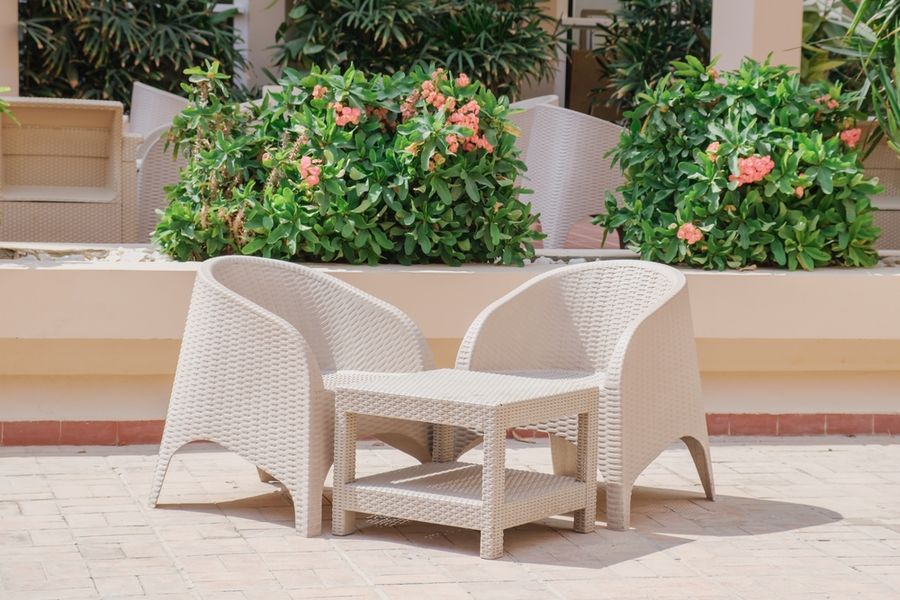
A backyard with the wrong furniture layout can feel cramped, no matter how much square footage you actually have. The most common mistakes have nothing to do with the size of the patio and everything to do with how the pieces are placed, sized, and grouped. That said, once you know what to look for, even a small space can feel open, comfortable, and easy to move through. Better yet, the fixes are usually simpler than you'd expect.
Pushing Everything Against the Walls
The first instinct when arranging a small patio is often to push every piece of furniture flush against a wall, fence, or railing. But this actually makes the space feel smaller, since it leaves an awkward, unused void right in the middle.
Pulling chairs and sofas slightly inward, even just a few inches, creates breathing room behind the seating and a more intimate conversation area in front. Larger pieces should be anchored toward an edge, but rarely shoved tight against it. A bit of negative space between the back of the furniture and the wall instantly makes the layout feel more designed.
Choosing Furniture That's Too Big for the Space
Oversized sectionals, deep-seated lounge chairs, and 8-person dining tables overwhelm small patios fast. It's vital to scale furniture to the footprint, not the wishlist.
Measure your patio carefully, then leave room for movement and overhead clearance before choosing pieces. A small loveseat, a few mid-sized lounge chairs, or a bistro set often serve a small patio far better than the showroom display you fell in love with. When in doubt, go a size smaller than you think you need.
Forgetting About Traffic Flow
Even on a tiny patio, people need to be able to move easily from the back door to the seating, to the grill, and out to the yard. The U.S. Access Board recommends a minimum 36-inch path for accessible routes, and the same dimension is a sensible rule of thumb for outdoor walkways.
If guests have to zigzag around a coffee table or squeeze past a chair to reach the grill, the layout is fighting the space. Map out the natural traffic paths first, then place furniture so it never blocks them.
Skipping the Rug or Choosing One Too Small
A well-sized outdoor rug instantly makes a layout feel more intentional. Skipping the rug entirely leaves furniture floating in space, while choosing one that's too small visually shrinks the entire seating arrangement.
Most experts recommend an outdoor rug big enough that all of your seating sits at least partially on it, ideally with the front legs of chairs and sofas on the rug. For a typical four-chair conversation area, a 5-by-7 or 6-by-9 rug usually works. Dining areas need a rug that extends at least two feet beyond all sides of the table so chairs don't slide off when pulled out.
Lining Pieces Up Instead of Grouping Them
A row of identical chairs along a fence line looks like a doctor's waiting room, not a backyard. Successful layouts group furniture into intimate clusters that face inward toward each other, encouraging conversation.
Two chairs and a small loveseat angled around a coffee table feel far more inviting than four chairs lined up along the same wall. Even on a narrow balcony, swiveling a single chair to face another piece at an angle creates a sense of relationship rather than parade-line stiffness.
Cramming in Too Many Pieces
More furniture doesn't mean more comfort. A patio with eight pieces shoved together feels chaotic and hard to move through, while the same patio with three or four well-chosen pieces feels relaxed and inviting.
Be sure to edit ruthlessly. Remove anything that doesn't serve a clear function, and consider multi-purpose pieces like storage benches or ottomans that double as side tables. The empty space around your furniture is what lets the eye rest and the layout breathe.
Ignoring the Focal Point
Every successful outdoor space has a focal point that anchors the layout, whether it's a fire pit, a view, a water feature, or a beautiful tree. Without one, the eye doesn't know where to land, and the space feels random.
Arrange seating to face the focal point, even at an angle. If your patio doesn't have a natural focal point, create one with a statement umbrella, an outdoor rug with a strong pattern, or a cluster of beautiful planters in one corner.
Trying to Create Too Many Zones in a Tiny Space
Designers love talking about outdoor "zones" for dining, lounging, and entertaining, but stuffing all of them into a 200-square-foot patio creates clutter and shrinks each zone past usefulness.
Instead, pick one or two functions that matter most to you, design the patio fully around those, and skip the rest. A perfectly executed tiny lounge area beats a tiny lounge plus a tiny dining table plus a tiny bar, all crammed elbow-to-elbow.
Forgetting Vertical Breathing Room
Layouts also feel cramped when there's no overhead space to breathe. Low-hanging market umbrellas, wide-canopy trees, or oversized pergolas can press down on a small patio.
Make sure overhead structures clear at least 7 feet from the floor, and that string lights and hanging planters don't impede eye level. Vertical breathing room is just as important as horizontal traffic flow, and small adjustments overhead can dramatically change how spacious a patio feels.
Designing for the Space You Have
The best patio layouts work with the size of the space rather than against it. Edit furniture down to the essentials, leave clear paths, group pieces into intentional conversation areas, choose a rug that suits the scale, and protect breathing room around the seating.
Most cramped patios get fixed not by adding anything, but by removing two or three pieces and rethinking the arrangement of what's left. With the right approach, the result is a space that feels calmer, larger, and far more enjoyable to use.