

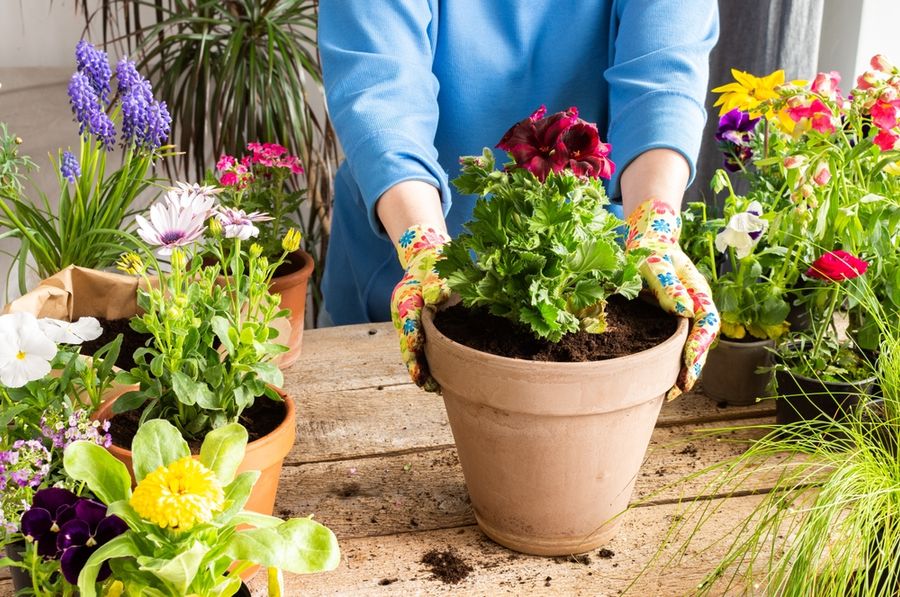
Container plants are among the most rewarding additions to a porch, patio, or balcony, but they live a tougher life than their in-ground neighbors. With limited soil and constant exposure to sun, wind, and rising temperatures, they can dry out in hours and decline in days during a heat wave. The good news is that a few simple adjustments to watering, placement, and feeding can keep your pots looking lush and full all summer long.
Water Deeply and Often
Container plants dry out far faster than in-ground plants, since their roots have only a small volume of soil to draw from. According to the University of Minnesota (UMN) Extension, container plants often need water once a day in summer, and sometimes twice on the hottest afternoons.
Water early in the morning when possible, then check again in the evening if pots are still dry to the touch. Always water until you see liquid draining from the bottom holes, which signals the entire root ball has gotten a drink rather than just the top inch. Stick a finger an inch or two into the soil before each watering. If it comes up dry, water. If it's still moist, wait.
Choose the Right Pot Size and Material
Pot size and material directly affect how often you'll need to water. Small pots dry out fastest, so go bigger when you can, especially for thirsty plants like petunias, tomatoes, and dahlias.
Terra cotta is beautiful but porous, which means it can dry out nearly twice as fast as plastic or glazed ceramic. Dark plastic pots heat up quickly in direct sun and can stress roots, while light-colored or unglazed pots stay cooler. Self-watering containers with built-in reservoirs are a smart choice for anyone who travels or just wants more forgiveness during a stretch of hot weather.
Mulch the Tops of Your Containers
Mulch is a secret tool for container gardening. A thin layer of bark, gravel, sphagnum moss, or shredded leaves on top of the soil can dramatically reduce evaporation and help keep roots cooler.
For decorative pots, river rock or shredded cedar dresses up the look while doing the job. Aim for half an inch to an inch of mulch, leaving a bit of space around the plant stems to prevent rot. Refresh the mulch as needed through the season, especially after heavy rains or repeated waterings wash some of it away.
Move Pots Around as the Sun Shifts
One advantage of container plants is mobility. During extreme heat, especially when temperatures climb above 90 degrees Fahrenheit, move sensitive plants to a spot with morning sun and afternoon shade.
Patios, porches with overhangs, and the shaded sides of the house are all options. Plants like succulents, lantana, and zinnias actually love full sun even during heat waves, but others, including coleus, fuchsia, and impatiens, will thank you for the break. Watch the leaves: drooping, scorched edges, or pale color usually mean relief is needed.
Fertilize Lightly but More Often
Frequent watering washes nutrients out of the container soil quickly. To compensate, feed container plants lightly but regularly. UMN Extension recommends applying a water-soluble fertilizer at half strength every one to two weeks during the growing season, or using a slow-release granular fertilizer that releases nutrients gradually with each watering.
Avoid heavy nitrogen-only formulas, which encourage leafy growth at the expense of flowers. Look for balanced ratios like 10-10-10, or slightly higher phosphorus for blooming plants like petunias and geraniums.
Group Pots Together to Boost Humidity
Plants release moisture through their leaves, and when pots are clustered together, that humidity creates a small microclimate that benefits everyone in the group. Grouping also makes watering more efficient and gives you a more abundant visual display.
Mix tall, mounding, and trailing plants for visual interest. Just make sure each plant still gets enough light, and rotate the arrangement occasionally to prevent any one plant from getting overshadowed by its neighbors.
Deadhead and Trim for Healthier Plants
A quick weekly grooming session keeps containers looking their best and encourages new growth. Pinch off spent blooms on flowering plants like marigolds, geraniums, and zinnias to promote continued flowering throughout summer.
Trim leggy stems back by about a third on plants that have stretched out, especially after the first heat wave. Removing yellowing or damaged leaves also reduces the risk of disease and helps plants direct their energy into healthy new growth.
Refresh Tired Soil Mid-Season
By midsummer, container soil often becomes compacted and depleted. Loosen the top inch of soil with a fork to improve oxygen flow, then top-dress with fresh compost or potting mix.
If a plant looks especially tired, it may have outgrown its pot. Tip it out gently to check whether the roots have circled tightly around the bottom, a condition called rootbound, and either trim the roots and add fresh soil or move the plant to a slightly larger container.
Watch for Common Heat-Related Issues
Heat stress, sun scorch, and aphid or spider mite infestations all spike in hot weather. Wilting that doesn't bounce back after watering, crispy brown leaf edges, and a dusty look on the underside of leaves are all warning signs.
Spider mites in particular thrive in hot, dry conditions and can be rinsed off with a strong spray of water from the hose every few days. Yellowing leaves often signal either underwatering, overwatering, or a nutrient deficiency, so a finger test of the soil is the first place to start.
Healthy Containers, Less Stress
Hot summer weather is the most demanding season for container plants, but with consistent watering, smart pot choices, regular feeding, and an eye on the forecast, even small balcony or patio gardens can look beautiful through the worst of August. A small amount of daily attention can pay off in tall, full, blooming containers that hold their own through the heat and right into early fall.