
A great backyard needs shade, but not too much. The trick is finding ways to block harsh afternoon sun without turning the space into a dark cave. Pergolas, umbrellas, shade sails, awnings, outdoor curtains, and well-placed trees all offer different combinations of coverage, filtered light, and flexibility. The right choice depends on your space, the climate, and how you want the yard to feel. Most homes benefit from layering two or three solutions together.
Start With Where the Sun Falls
Before adding any shade structure, spend a few days noticing where the sun actually hits your backyard at different times. Morning sun, afternoon sun, and the harsh overhead sun of midday all need different solutions.
Note which seating areas, dining spots, and play areas get the worst exposure. The west and south sides of the yard generally need the most attention, especially in summer. A simple sketch of your yard with morning, noon, and evening sun marked helps you plan shade in exactly the right spots rather than scattering it randomly.
Add a Pergola for Filtered Light
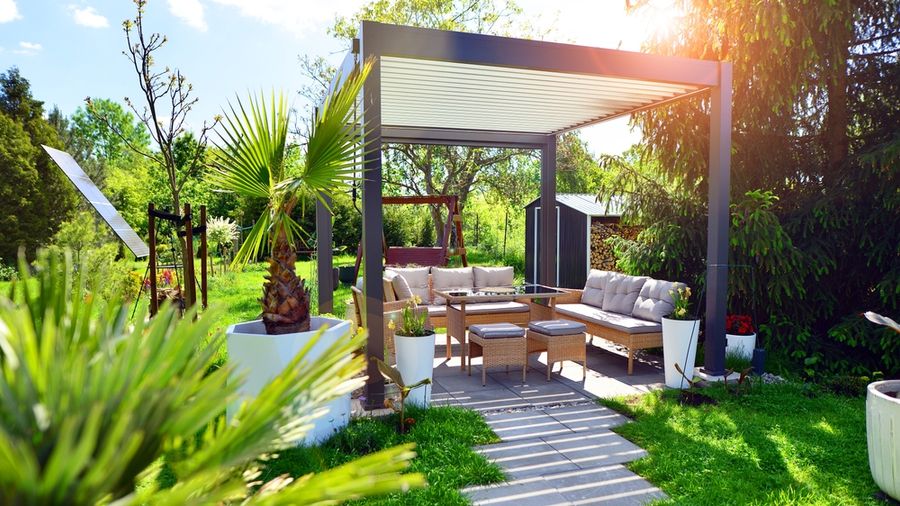
A pergola is one of the most popular shade structures because it creates definition and filtered light without blocking the sky. The open beams overhead break up direct sunlight while letting plenty of brightness through.
Pergolas typically cost between $1,300 and $4,000 to build, depending on size and style. Louvered pergolas with adjustable slats give you full control, opening for sun and closing for shade as needed. Pair a pergola with climbing vines like wisteria, climbing hydrangea, or grape for living shade that gets better every year.
Use a Patio Umbrella for Flexible Shade
A quality patio umbrella offers the simplest, most flexible shade option. Cantilever umbrellas with offset bases are especially useful, since the canopy can rotate and tilt with the sun without a center pole interrupting the seating.
When shopping, look for sturdy bases, UV-resistant canopies in 600D polyester or Sunbrella fabric, and tilt or crank mechanisms that are smooth to operate. Multiple smaller umbrellas placed strategically often work better than one large umbrella trying to cover an entire seating area.
Install a Retractable Awning
A retractable awning attached to the house gives you on-demand shade with the press of a button or turn of a crank. Modern retractable awnings range from about $1,000 to $10,000, or more, depending on size, fabric, and whether they're manual or motorized.
Because they retract completely, awnings don't block light or rain when you don't need them. They're a great option for patios that get harsh afternoon sun but still benefit from morning brightness. Some models include wind sensors that automatically retract the awning in gusty weather.
Hang a Shade Sail
Shade sails offer modern, sculptural style at a fraction of the cost of permanent structures. Most range from $30 to $400, depending on size and fabric quality.
They install with anchor points on existing structures or sturdy posts, and they can be arranged in triangular, rectangular, or overlapping configurations to cover specific areas. Sails work especially well over patios, play areas, or pool decks, and they can be removed and stored in winter to extend their lifespan.
Add Outdoor Curtains for Soft Coverage
Outdoor curtains hung from a pergola, gazebo, or a simple rod between two posts add both shade and softness. Linen, sheer fabric, or canvas curtains filter light beautifully while creating a sense of enclosure when needed.
They can be tied back during the day and drawn for late afternoon sun or privacy. Outdoor curtains work especially well combined with another shade structure, since they fine-tune coverage at lower angles where overhead shade can't reach.
Plant Deciduous Trees for Seasonal Shade
For long-term shade that adjusts naturally to the seasons, plant deciduous trees on the south and west sides of the yard. They provide cooling shade in summer and let warm sunlight through in winter when the leaves drop.
The Arbor Day Foundation lists fast-growing options like red maple, dawn redwood, hybrid poplar, and sweetgum. Position trees about 15 to 20 feet from the house and any patio so they shade the area without dropping debris directly on it.
Try Trellises With Climbing Vines
Vertical trellises covered in climbing vines offer surprisingly effective shade for a modest investment. A trellis topped with climbing roses, wisteria, or climbing hydrangea can shade a small patio in two to three growing seasons.
Trellises also screen unwanted views, soften hardscape, and add the kind of architectural detail that defines high-end outdoor design. Place them where afternoon sun is the worst, and they'll do double duty as shade and visual interest in the same footprint.
Combine Methods for the Best Results
The most comfortable backyards usually layer two or three shade solutions rather than relying on just one. A pergola overhead with a shade sail in the most exposed corner, an umbrella over the dining table, and a maple tree planted to shade the patio's west side all work together.
Layered shade tracks the sun more effectively than any single solution and keeps the yard usable from morning through evening. Each piece can be added gradually as budget and time allow.
A Cool, Bright Backyard All Summer
Remember that the goal is comfortable shade, not constant shadow. With a thoughtful mix of pergolas, umbrellas, awnings, sails, curtains, trees, and trellises, even the sunniest backyard can become a place you actually want to spend time during the hottest months.
Start with the spot where the sun bothers you most, choose a solution that fits your style and budget, and add more as the yard evolves. A few well-chosen shade additions can transform an exposed yard into a true outdoor room.