

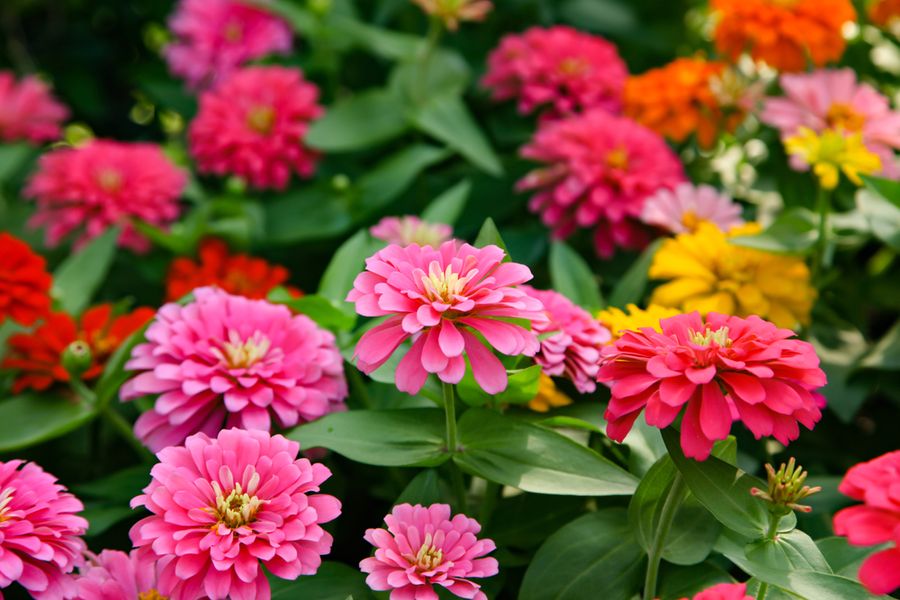
There's nothing more deflating than walking out to the garden in May and seeing patches of bare earth between your perennials. The good news is that some of the most reliable flowers also happen to grow remarkably fast. Sown now, the right annuals can fill empty spaces with color in as little as six to ten weeks, just in time for the height of summer! A few packets of seeds and a sunny afternoon are all it takes.
Zinnias
Few annuals deliver more color for less effort than zinnias. They germinate in days and can flower in as little as 60 days from seed, often blooming continuously from midsummer through the first hard frost.
Direct sow seeds outdoors after all danger of frost has passed and the soil has warmed, then thin seedlings to about 6 to 12 inches apart. Zinnias come in nearly every color except true blue, and they pull double duty by attracting butterflies and making excellent cut flowers. Tall varieties like Benary's Giant suit the back of borders, while compact types like the Profusion series stay tidy in front-row positions.
Cosmos
Cosmos are wispy, romantic, and almost embarrassingly easy to grow. Direct sow seeds in warm soil, and you'll often see flowers within 10 to 12 weeks. Plants reach 2 to 5 feet, depending on the variety, swaying gracefully in any breeze and producing daisy-like blooms in pink, white, magenta, and even chocolate.
Cosmos actually flowers more abundantly in poor soil than in rich, so skip the fertilizer and water modestly. Plant en masse for a soft, meadowy effect that fills empty corners with movement and color all the way to fall.
Marigolds
Few flowers earn their reputation as a beginner-friendly bloom quite like marigolds. French marigolds typically begin flowering 50 to 65 days from seed and continue right through the first frost. Their warm orange, gold, and red tones brighten any bed, and they pair beautifully with cool blue and purple flowers nearby.
Marigolds also have a long-standing reputation in vegetable gardens for repelling certain pests, making them a favorite around tomatoes and peppers. Pinch off spent blooms regularly to keep plants flowering instead of going to seed too soon.
Sweet Alyssum
For sheer flower power per square inch, sweet alyssum is hard to beat. According to the University of Wisconsin Horticulture Extension, plants begin flowering as early as 6 weeks after sowing and form low, frothy mats of tiny honey-scented blooms.
Direct sow in spring once frost has passed, and tuck seeds along path edges, between stepping stones, in containers, or under taller plants where you want to fill bare ground. Sweet alyssum self-seeds readily and often returns the following season with no extra effort on your part. It's also a magnet for tiny beneficial insects that help control aphids elsewhere in the garden.
Nasturtiums
Nasturtiums offer a tropical, almost edible look with rounded leaves and bright red, orange, and yellow blooms. Direct sown nasturtiums typically flower in just 50 to 60 days. They actually prefer poorer soil, so resist the urge to fertilize.
Choose trailing varieties to spill from window boxes, hanging baskets, or over stone walls, or pick compact bush types for tidy bedding. As a bonus, both the leaves and flowers are edible, with a peppery, watercress-like flavor that brightens summer salads and sandwiches.
Calendula
Calendula, sometimes called pot marigold, produces cheerful daisy-like flowers in soft yellow, orange, and apricot tones. According to The Old Farmer's Almanac, seeds can be sown directly in the garden as soon as the soil can be worked, and most varieties begin blooming within 6 to 8 weeks.
Calendula prefers cool weather, which makes it ideal for filling spring gaps in the bed. Deadhead regularly, and the plants will keep flowering well into summer, then often again in fall as temperatures cool back down. The petals are also edible and have been used in teas and salves for centuries.
Bachelor's Buttons and California Poppies
Bachelor's buttons, also called cornflowers, and California poppies belong on any short list of fast-blooming annuals. Both can flower within 65 days of direct sowing. Bachelor's buttons bring a true blue tone that's hard to find anywhere else in the garden, while California poppies produce brilliant orange cups on feathery silver-green foliage that closes up at night and on cloudy days.
Both prefer full sun and average soil, and both will self-seed enthusiastically if you let a few flowers go to seed at the end of the season, giving you an even quicker start next year.
How to Speed Things Up Even More
Colorado State University Extension recommends preparing the soil well before sowing, since loose, weed-free ground gives seedlings the best possible start. Soak hard-coated seeds like nasturtiums or morning glories overnight to speed up germination, and keep the soil consistently moist until seedlings are well established.
Sowing in succession every two to three weeks extends bloom time across the whole season. Also, group plants in clusters of three or more rather than in single rows for a fuller, more abundant look from day one. A light layer of mulch around young plants can also help retain moisture and keep weeds from competing.
A Few Weeks of Patience for a Season of Color
Filling bare garden spots with color doesn't require a trip to the nursery for expensive trays of mature plants. A handful of seed packets, a sunny patch of warm soil, and a little patience are usually enough to transform empty ground into a colorful corner within two months.
The flowers will keep blooming all the way through fall in most regions, often dropping seeds for an even faster start the following year. A small investment now buys months of color, butterflies, and beauty just outside your door.