

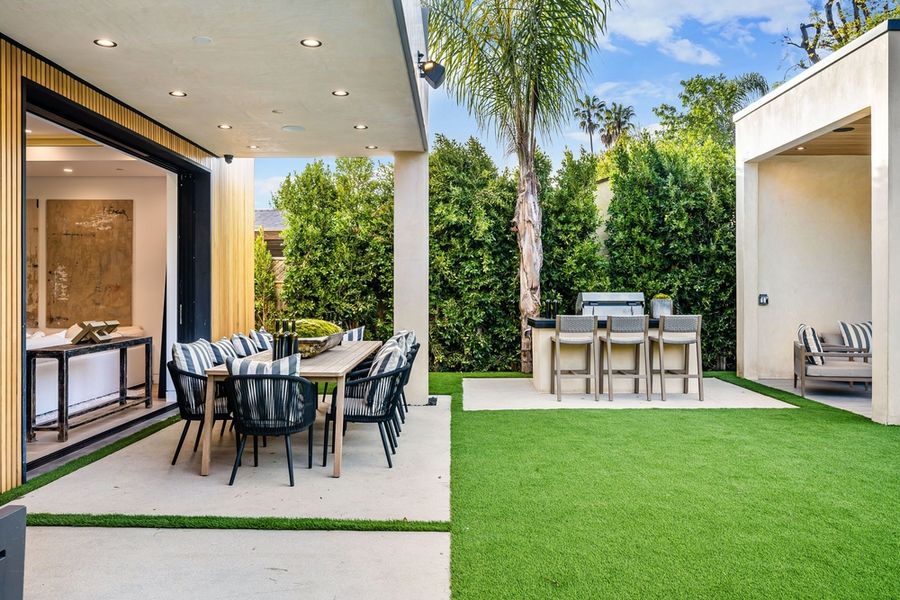
Even a small backyard can feel like a private retreat with a few thoughtful design choices. Landscape designers approach yards as a series of layered, intentional spaces, each shaped by plants, structure, light, and sound. The good news is that you don't need a huge budget to apply the same thinking at home. With a handful of small changes, almost any yard can become the kind of place where the world fades a little the moment you walk out the back door.
Layer Plants in Tiers for a Living Privacy Wall
The most natural-feeling privacy comes from layered planting rather than a single row of tall trees. Using two or three rows of trees and shrubs of varying heights, with the tallest at the back and shorter perennials in front. This staggered approach creates a fuller, more textured screen that fills in faster and looks far more inviting than a flat hedge.
Mix a few different species too, since planting all of one variety leaves you vulnerable to disease or pest outbreaks. Evergreens like arborvitae or holly anchor the back row, while flowering shrubs and perennials soften the look closer to the patio.
Add Overhead Structure With a Pergola or Arbor
Privacy doesn't only come from blocking horizontal sightlines. A pergola, arbor, or simple slatted overhead beam dramatically changes how a backyard feels by adding a sense of enclosure from above. Even an open structure breaks up direct views from second-story neighbors and creates a defined outdoor room beneath it.
Climbing vines like clematis, wisteria, climbing hydrangea, or jasmine add living shade and a soft canopy. Outdoor curtains hung from the structure can also be drawn or pulled back, depending on how private you want the space to feel on any given day.
Define Outdoor "Rooms" With Furniture and Rugs
Outdoor rooms or "use zones" are distinct areas of the yard, each shaped for a specific purpose. Even a modest backyard can have a dining area, a lounge, a fire pit zone, and a small reading nook, simply by anchoring each spot with intentional furniture and an outdoor rug.
The rug visually contains the space the same way it would indoors. Group seating to face inward toward the focal point of the room rather than out toward the property line, which makes the whole area feel more like its own world.
Bring in the Soothing Sound of Water
Few elements transform a backyard's mood more than the sound of moving water. Even a small bubbling fountain or a self-contained tabletop water feature creates a steady, soft hum that masks neighborhood noise like traffic or air conditioners.
Larger ponds, recirculating wall fountains, and stone bowls with simple bubblers all do the same thing. Place water features near your main seating area where you'll hear them most. The white noise alone is enough to noticeably lower the stress register of the entire space.
Use Soft, Warm Lighting
Harsh overhead floodlights kill the relaxing mood faster than almost anything else. Aim for layered, warm-toned lighting in the 2,200 to 2,700 Kelvin range. String lights overhead, lanterns and candles on the table, and low-voltage path lights at ankle height create a flattering glow.
It's also worth considering solar-powered options. They make installation easy, especially in spots without nearby outlets. Place lights to highlight features you love, like a specimen tree or a water feature, and skip the corners where you don't need to draw the eye.
Plant for Scent and Touch
A relaxing backyard appeals to more than just sight. Lavender, jasmine, gardenia, mint, and herbs like rosemary or thyme all release scent when brushed against, especially in warm weather. Ornamental grasses rustle in the breeze and add gentle movement that brings a still yard to life.
Lamb's ear, dusty miller, and many sedums offer soft, touchable foliage worth running your hand across. Consider placing scented plants close to the seating area or along walkways where you'll naturally interact with them. Even tucking a few herbs into a single pot near the door brings sensory delight every time you walk past it.
Mix Hardscape and Plant Material
The most successful private backyards blend built structures with plant material. A solid privacy fence on its own can feel cold and prison-like, but the same fence softened with climbing roses, lattice panels, or espaliered fruit trees becomes a beautiful boundary.
Stone walls, raised beds, screens, and tall potted plants can all serve double duty as privacy and design features. Mixing materials adds texture and depth, and helps the space feel more like a curated room than a fenced-in lot.
Block Specific Sightlines, Not the Whole Yard
You rarely need to wall off the entire backyard. Take a slow walk around your property and identify the specific spots where you feel exposed: maybe a neighbor's second-story window looking down on the patio, or a sidewalk view through the side gate.
Block those exact sightlines with targeted plantings, screens, or strategically-placed structures. Tall potted plants can offer instant privacy in the right spot, and they're far cheaper than fencing the whole yard. This approach keeps the space feeling open and airy while still solving the privacy problem.
A Backyard That Welcomes You In
Designing a private, relaxing backyard happens in layers, not all at once. Research published in Scientific Reports has found that even short exposure to nature-rich environments measurably lowers stress hormones, blood pressure, and heart rate. The right combination of plants, structure, light, and sound turns an ordinary yard into a daily reset for everyone who steps outside.
Start with one or two changes that solve your biggest exposure points, then build from there. A backyard that welcomes you in is one you'll actually use.