

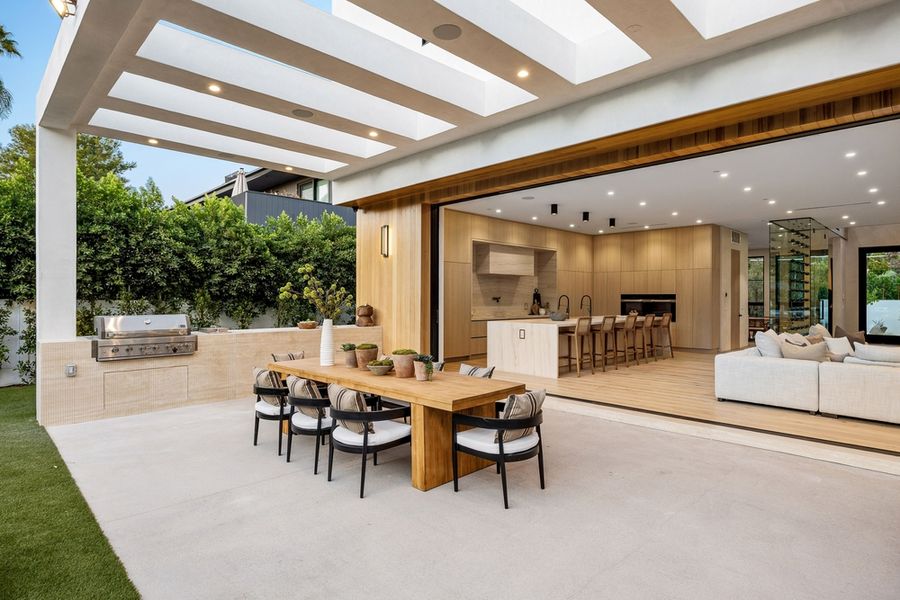
What separates an ordinary backyard from one that looks like it belongs in a design magazine often comes down to a handful of specific features. Cohesive materials, built-in elements, and layered lighting do far more for the look of a space than another trendy planter or piece of patio furniture ever could. The good news is that you don't have to remodel everything at once to start moving your yard in that direction.
Cohesive Hardscaping Sets the Tone
The fastest way to elevate a backyard is to commit to cohesive hardscaping. Patios, walkways, and seating walls made from a unified material like flagstone, large-format porcelain pavers, or brick instantly read as more thoughtful than a patchwork of small, mismatched stones.
Large-format pavers in particular are a hallmark of modern luxury landscape design, since fewer joints mean a sleeker overall look. A general rule is to stick to two or three complementary materials throughout the yard rather than introducing a new texture every few feet. Whatever you choose, repeat it. Repetition is what makes a designer-built space feel intentional rather than accumulated over time.
A Built-In Fire Feature Anchors the Space
Few elements transform a yard like a built-in fire feature. Portable fire pits are fine for occasional use, but a permanent gas or wood-burning installation built into stone, masonry, or a paver patio can really elevate a space.
Sleek linear gas fire tables integrated into seating walls, or stone fireplaces that anchor a small outdoor lounge, are standout features in upscale backyard design. Fire features are increasingly central to how modern landscape designers create gathering spaces, drawing people together in the same way a hearth does indoors.
An Integrated Outdoor Kitchen, Not a Standalone Grill
A wheeled grill rolled out from the garage looks exactly like what it is. A built-in outdoor kitchen with countertops, integrated grilling, refrigeration, storage, and a small bar reads as an extension of the home itself.
According to the National Association of Realtors' Remodeling Impact Report, outdoor kitchens are among the highest-rated outdoor projects for both homeowner enjoyment and resale value, with many homeowners recovering close to 100 percent of their cost. You don't have to go all in. Even a modest L-shaped masonry island with a built-in grill, stone countertop, and cabinet storage instantly elevates the space.
Layered Landscape Lighting
Few details separate a high-end yard from a basic one quite like landscape lighting. The trick is to layer it. Ambient lighting illuminates broad areas, task lighting handles steps and walkways, and accent lighting highlights specimen trees, water features, or architectural details.
Avoid harsh, single-source floodlights, which flatten the entire space. Aim for warm color temperatures around 2,700 Kelvin and use multiple low-voltage fixtures to create depth. NAR research has shown that professional outdoor lighting can recover roughly half its cost at resale and dramatically increases a home's perceived value at any price point.
A Pergola or Other Shade Structure
A well-built pergola, gazebo, or louvered roof structure adds vertical interest, defines an outdoor room, and provides a place to mount overhead lighting and fans. Modern aluminum or steel pergolas with motorized louvers feel especially upscale, since they let you control sun and rain at the touch of a button.
Wood pergolas, particularly cedar or hardwood, age beautifully and add warmth. Pair the structure with sheer outdoor curtains, climbing vines, or a hanging chandelier-style fixture to make it feel truly finished.
Mature Plants and Specimen Trees
Landscapes look expensive when they look established, and nothing says established like mature plant material. A few large specimen trees, oversized boxwoods, or sculptural Japanese maples make a yard feel decades older than it actually is.
Tall ornamental grasses, layered evergreen hedges, and substantial perennial beds all signal investment and long-term care. Symmetry adds polish, especially flanking entryways or bordering paths. Splurging on a few large plants and filling in around them with smaller, faster-growing pieces is a classic designer move that delivers immediate impact.
Water Features Done Tastefully
A small fountain or recirculating water feature can elevate a yard, but tasteful execution matters. Skip the kitschy three-tier garden center fountain in favor of a simple stone basin, a sleek wall-mounted spout, or a quiet bubbler tucked among plants.
The sound is what most people notice first, masking street noise and creating a sense of calm. Pair the water feature with surrounding ferns, mosses, or stone for a more designed, intentional look that feels embedded in the landscape rather than dropped on top of it.
High-Quality Furniture That Looks Built for the Space
Cheap, plastic-feeling furniture telegraphs everything about an outdoor space. Investing in a few well-made pieces in teak, powder-coated aluminum, all-weather wicker, or stone goes much further than overcrowding the patio with budget options.
Be sure to choose pieces in scale with the space, with cushions in solution-dyed acrylic fabric that holds up to sun and rain. Built-in seating around a fire feature or along a low wall feels especially upscale and naturally encourages people to gather there for hours.
Continuity With the House
Expensive-looking yards rarely feel disconnected from the house they belong to. Be sure to match exterior trim and railing finishes to outdoor cabinetry, repeat planting groupings on either side of the back door, and pull architectural details from the home into the landscape, like the same brick used on the chimney appearing on a garden wall. The home and yard should feel like one continuous design rather than two separate projects stitched together.
Looking Expensive Without Spending Like It
You can't buy mature trees overnight or install a custom pergola in an afternoon, but most luxury features started with a single thoughtful decision. Start where you'll feel the impact most, whether that's swapping mismatched pavers for one consistent material, building in a permanent fire feature, or finally addressing the lighting. Each upgrade will compound, and over a few seasons, even an ordinary yard can take on the kind of polished, designer look that makes everyone who visits ask who did the design.