

Some decorating choices look fresh for a year or two, then suddenly date the entire home. The trick is recognizing the common offenders before you commit to the next big purchase or renovation. Designers across the country agree that certain materials, color schemes, and trend pieces signal exactly when a space was last updated. Luckily, a few small swaps can carry a home into its next decade looking current. Plus, avoiding the worst offenders saves real money down the line.
Tuscan and Old World Themes
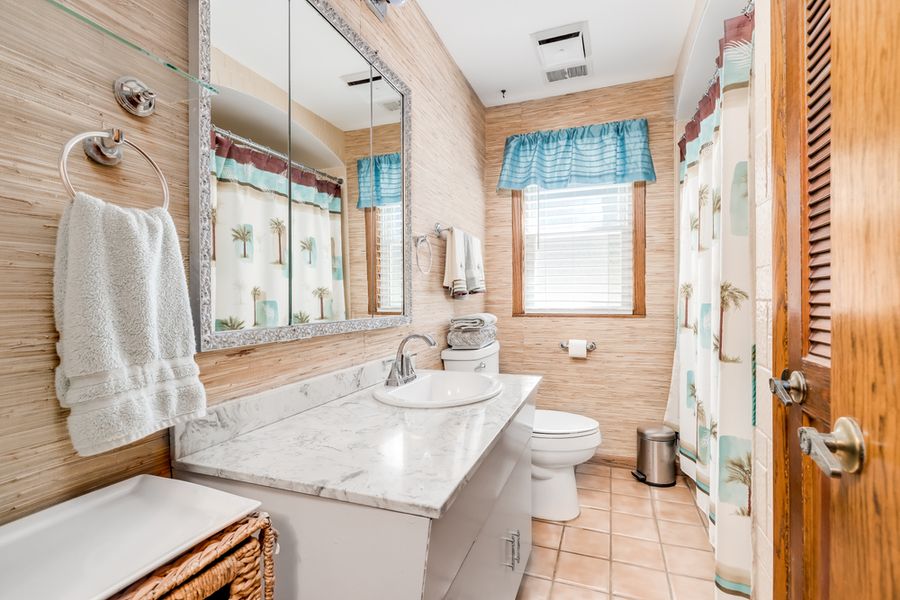
Few decorating styles date a home faster than the Old World Tuscan look that dominated the early 2000s. Dallas designer Janice Burkhart told Southern Living that "the Old World looks with things like textured walls with golden tones, drapery that has an orange undertone, and all-brown furniture have got to go."
Heavy faux-finish walls, sun-baked oranges, olive motifs, and wrought-iron everything land in the same category. The good news is that a coat of paint, fresh upholstery, and lighter window treatments can reset most of these spaces without major construction.
Granite, Travertine, and Tile Countertops
Stone choices that felt cutting-edge fifteen years ago now firmly date a kitchen or bath. Burkhart also told Southern Living that "there isn't any granite out there that would suffice for a countertop in the kitchen at this point" and recommends marble, quartz, or soapstone instead.
Tile countertops, with grout lines that trap grime, are even more dated. Travertine tile, especially the tumbled or hole-pocked variety popular around 2005 to 2010, is another giveaway. Quartz in particular offers similar performance to granite at a comparable price point and looks far more current.
Wall-to-Wall Carpet Outside the Bedroom
Wall-to-wall carpet beyond the bedroom is one of the most universal dating signals. Designer Rebecca Frye Jones told The Spruce that wide carpet "tends to flatten the space and give a dingy feeling," and recommends area rugs over hard flooring instead.
Burkhart agrees, telling Southern Living that "carpet just does not last 20 years. I don't care how clean you keep it, it looks matted and worn over time." Hardwood, luxury vinyl plank, and tile with strategically placed area rugs all age much better.
Standard Overlay Cabinets and White Appliances
Cabinet style is a quiet but powerful dating signal. Burkhart told Southern Living that "the standard overlay immediately dates anything because you know exactly that it was built in 2000." Full-overlay or inset cabinets read far more current.
Pebble-textured white appliances follow a similar pattern. Stainless steel has long since taken over as the standard, with paneled and integrated appliances becoming increasingly common in higher-end kitchens. Replacing cabinet doors and drawer fronts is a relatively affordable way to update without a full renovation.
Matchy-Matchy Furniture and Heavy Themes
Buying a complete matching furniture set may have seemed efficient, but designers say it's one of the fastest ways to make a room feel outdated. Jones told The Spruce that "those spaces feel more catalog than curated," and recommends a layered mix of vintage and contemporary pieces.
The same advice applies to heavy themes. Designer Emily Roose told The Spruce that rooms "themed to the extreme," like nautical, Italian, or full farmhouse, look dated immediately. Inspiration is fine, costume design is not. Take cues from a style without flooding every surface with literal references to it.
All-Gray Color Palettes
The grip that millennial gray held on interiors for over a decade is now firmly in the rearview mirror. Designer Kristina Petit told The Spruce that "the pendulum swung warm after the death grip millennial gray had on us for a decade, and now anything cool-toned is a huge tip-off that it's more than time for an update."
Warm whites, creamy off-whites, soft beiges, butter yellows, and earthy greens are now leading the way. Even one or two warm-toned changes, like new paint or warmer wood furniture, can shift a gray-heavy space without a full repaint.
Barn Doors
Barn doors had a moment, but designers agree the moment is over. "They're a quick tip off that the trend has passed and you've been left behind along with it," Petit told The Spruce. Unless you actually live in a converted farmhouse, swapping the barn door for a traditional door, pocket door, or French doors instantly modernizes the space.
Bold Trend Fabrics Like Chevron and Ikat
A few specific patterns are particularly hard to date neutrally. Chevron, ikat, and oversized damask all peaked in the 2010s and now read as design shorthand for that era. Designer Amy Elbaum told House Beautiful that chevron is "such a bold pattern and usually includes high-contrast colors that make this type of fabric tire very quickly over time."
Trend-driven fabrics are best reserved for small accent pieces like throw pillows that are easy to swap out, rather than expensive sofas or upholstered headboards you'll live with for fifteen years.
Built-Ins Designed for Bulky TVs
Cabinetry sized for the deep, boxy televisions of two decades ago is one of the loudest signals that a room hasn't been updated. Jones told The Spruce that "these styles interrupt the architecture of a space and are an immediate timestamp in a room."
Today's flat-panel televisions can hang flush against the wall like art, freeing up the architecture entirely. If you can't tear out the built-in, painting it the same color as the surrounding wall and removing extraneous trim can help it blend in until you can fully replace it.
Updates That Age Well
The throughline of every designer's advice is to choose materials and pieces that can stand on their own decades from now. Natural materials, neutral palettes, mixed and layered furniture, and architectural details that respect the home's bones tend to age the most gracefully.
Trend-driven choices in textiles, hardware, and decor are easier to swap, so if you love a current look, save it for those layers. Ultimately, it's important to remember that the bones of the home are where it pays to play the long game.