

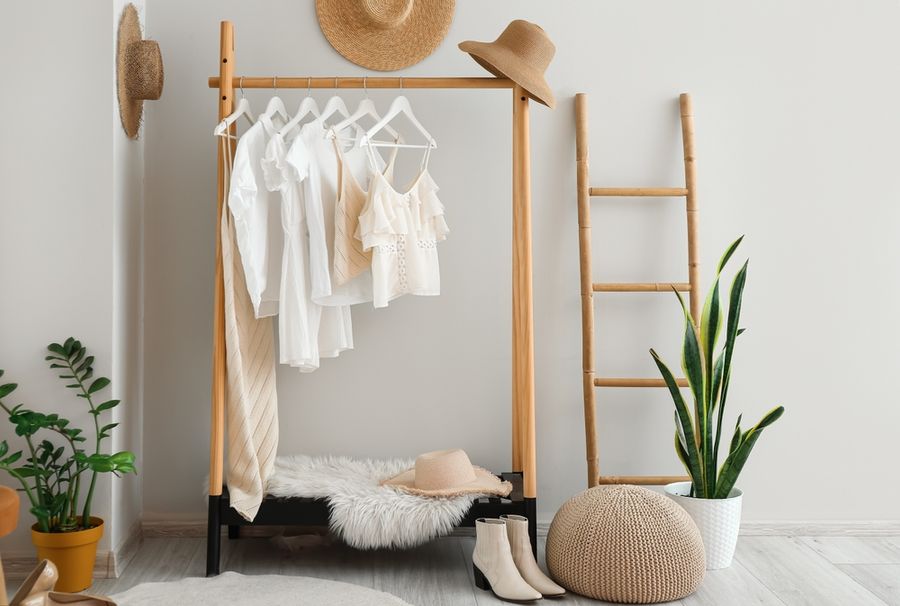
Homes without traditional closets force homeowners to get creative, but a missing closet doesn't have to mean cluttered floors or piles of clothes draped over chairs. Older homes, apartments, lofts, and bedrooms that simply weren't designed with built-in storage can still feel organized and intentional with the right approach. The trick is combining smart freestanding furniture, vertical thinking, and a thoughtful look at what you actually own and use daily.
Add a Wardrobe or Armoire
A freestanding wardrobe or armoire is the most direct replacement for a missing closet. These pieces offer hanging space, drawers, and sometimes shelving behind closed doors, and they come in styles ranging from sleek modern designs to ornate vintage pieces.
Look for something with adjustable interior components so you can customize the inside as your storage needs change. Vintage armoires can often be found at estate sales or flea markets for far less than new ones and add character to the room as a bonus. Place the piece against a wall where you'd normally find a closet, and the bedroom suddenly has its own dedicated clothing storage.
Make the Most of Under-Bed Storage
The space under the bed is some of the most underused real estate in the entire home. Low-profile rolling bins, fabric storage drawers, and vacuum-sealed bags all work well for off-season clothing, shoes, extra bedding, and bulky items.
If your bed sits too close to the floor for storage to fit, inexpensive bed risers can lift it 3 to 6 inches and instantly create useful space underneath. Beds designed with built-in drawers or lift-up platforms are another great choice when you're shopping for a new frame.
Take Advantage of Vertical Wall Space
Empty walls are essentially free storage waiting to be claimed. Install floating shelves above doors, around windows, or along high points of any wall to hold books, baskets, and decorative storage boxes.
A wall of pegs or hooks can also turn a blank space into a place to hang hats, bags, coats, jewelry, or rotating clothing items. Even thin floor-to-ceiling shelving along a short wall can store a surprising amount without taking up much floor space.
Use Over-the-Door Organizers
Over-the-door organizers are one of the most space-efficient storage tools available. The standard shoe organizer pockets are useful for far more than shoes. They work beautifully for toiletries, cleaning supplies, snacks, accessories, scarves, and small toys.
For renters, over-the-door hooks and racks don't require any holes, just careful placement and a sturdy door. Even a single over-the-door rack can hold a surprising amount of clothing, belts, and accessories.
Add Storage Benches and Ottomans
Furniture that doubles as storage is the workhorse of any home without closets. A storage bench at the foot of the bed holds extra blankets, off-season sweaters, or sports gear. A storage ottoman in the living room handles throws, remotes, and books.
An entryway bench with a flip-top seat can store shoes, while shoe cubbies underneath keep daily-wear pairs visible and ready to grab. Every piece that hides storage inside its footprint earns its place twice over.
Try Open Shelving and Cube Units
Open shelving and modular cube units offer flexible storage without permanent installation. Use baskets, bins, and fabric boxes to corral smaller items and keep the look tidy.
Open shelves work especially well when paired with rolled towels, neatly folded sweaters, books, or styled groupings of objects. A row of matching baskets along a shelf can replace a small linen closet, a paper drawer, or even a craft cabinet, depending on the room.
Free-Standing Garment Racks for Renters
For renters or anyone hesitant to commit to a wardrobe purchase, a free-standing garment rack offers an easy, affordable alternative. Tension-pole racks require no hardware and can be set up in an afternoon.
Industrial-style pipe racks add a modern aesthetic, while clothing displays styled like a boutique can become a statement in the room. A small lamp or plant nearby helps the rack feel like an intentional design choice rather than a temporary fix.
Build a Capsule Wardrobe to Cut Back on Stuff
Sometimes the best storage solution is owning less. A capsule wardrobe is a small, curated collection of clothes that all coordinate with each other.
The idea is to dress better with less, since every piece works hard and earns its place. Pulling together a capsule wardrobe forces you to recognize what you actually wear versus what's just taking up space. The same approach works for kitchens, bathrooms, and any other room that's quietly spilling over with things you don't really use.
Use Every Inch of the Entryway
Entryways without closets can quickly become piles of shoes, coats, bags, and mail. You can consider hanging a wall-mounted rack with hooks at varying heights, placing a storage bench underneath, and adding a small basket for keys and mail.
A narrow console table or a shallow wall-mounted shelf above the bench can also hold smaller items. With the right combination, even a few feet of entryway wall can feel as functional as a coat closet, often more so.
Storage Solutions That Make Every Inch Count
A home without closets just calls for a different kind of thinking. Add a wardrobe or two, make the underside of the bed work for you, claim the walls and doors, and choose furniture that earns its place by holding things.
Above all, edit what you own. The combination of smart storage and a thoughtful inventory makes any home feel organized, no matter what the floor plan does or doesn't offer.