

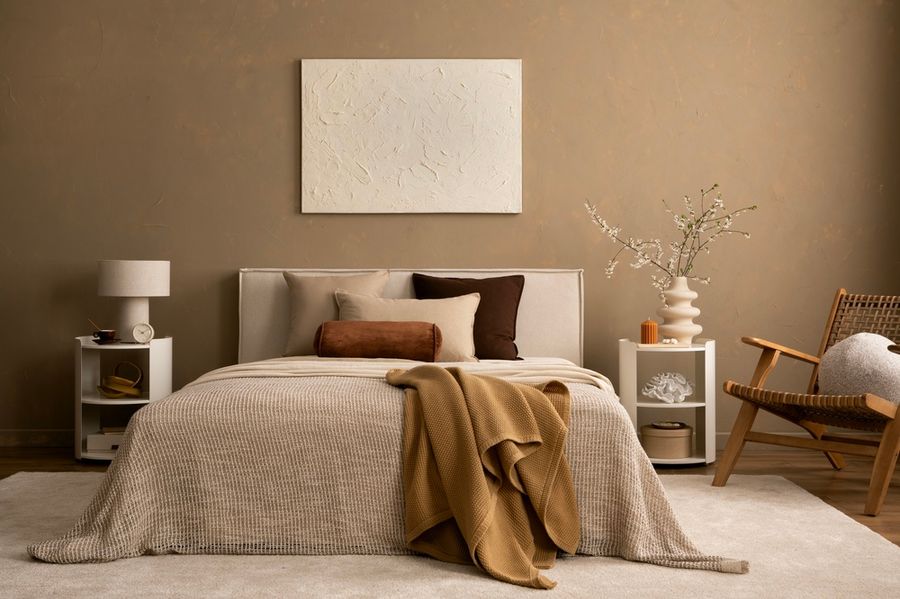
A bedroom is the one room in the house that should feel completely restorative. The right design choices make the difference between a room that helps you wind down and one that quietly keeps you on edge. Calming colors, comfortable bedding, layered lighting, and a thoughtful approach to clutter all combine to create the kind of space that supports real rest. Most changes cost very little but pay off every single night.
Choose a Soft, Calming Color Palette
Color sets the mood for the entire room. Living Etc. notes that designers consistently recommend soft, muted tones like beiges, taupes, off-whites, and gentle blues for bedrooms, since these colors feel restorative rather than energizing.
Sage green, pale terra cotta, and warm putty are also favorites for adding subtle warmth without overstimulating the eye. Avoid high-contrast color combinations, bold patterns on walls, or saturated colors that wake the brain up. The bedroom is one room where the goal is to dial things down, not up.
Invest in Quality Bedding and Pillows
The bed is the focal point of the room and the part of it you actually use. Quality sheets in linen, cotton percale, or cotton sateen, a duvet that suits the climate, and pillows that match how you sleep all matter more than the price tag of any furniture in the room.
Aim for natural fibers that breathe well, layer in a quilt or coverlet for visual depth, and replace pillows when they no longer hold their shape. Wash sheets weekly in your usual detergent, since the familiar scent and feel of fresh bedding signals to the brain that it's time to wind down. Crisp, clean bedding is one of the easiest upgrades that makes the entire room feel more luxurious.
Get the Lighting Right (and Out of the Way)
Harsh overhead light is the enemy of bedroom relaxation. Low color temperature and warm illuminance to help signal the body that it's time to wind down.
Use bedside lamps for reading and ambient warmth, sconces for clean lines, and a flush-mount fixture or chandelier overhead only if you also have dimmers. Smart bulbs that shift to warmer tones in the evening can also help reinforce the body's circadian rhythm without requiring you to think about it.
Block Out Light at Night
Even small amounts of stray light can disrupt sleep. The Sleep Foundation emphasizes that light is the most powerful cue for the circadian rhythm, and the bedroom should be as dark as possible during sleep hours.
Blackout curtains, top-down bottom-up cellular shades, or even a quality sleep mask can all help. Cover small light-emitting indicators on electronics with blackout stickers, and choose alarm clocks with dim, red-toned displays rather than bright LCDs that pulse through the night.
Keep the Room Cool
Temperature plays a huge role in how the bedroom feels and how well you sleep. The Sleep Foundation cites around 65 degrees Fahrenheit as the ideal sleep temperature.
Cooler rooms support deeper sleep, while warmer rooms tend to cause restless nights. Also, be sure to use breathable bedding in summer, layer blankets in winter, and consider a quiet bedroom fan year-round. The white noise alone helps many people fall asleep faster.
Reduce Visual Clutter
Clutter creates stress, and the bedroom is one of the worst places for it. A clean, organized environment supports relaxation, while cluttered surfaces signal unfinished business and pull on the mind.
Keep nightstands edited to a lamp, a book, a glass of water, and one or two small things you love. Use storage to put laundry baskets, exercise equipment, and paperwork out of sight. The bedroom should be reserved for rest, not for everything in life that didn't fit somewhere else.
Layer in Soft Textures
A bedroom that looks beautiful but feels stark won't actually relax you. Pile on soft textures: a wool or cotton rug underfoot, a chunky throw at the end of the bed, an upholstered or padded headboard, linen curtains that move in a breeze.
The contrast between smooth, crisp sheets and soft, layered surfaces is what makes high-end bedrooms feel like places you sink into rather than just sleep in. Aim for at least three different textures within easy reach of the bed.
Add Scent and Sound for the Senses
The most relaxing bedrooms appeal to all the senses. Light a candle in lavender, sandalwood, or vanilla in the evening, or use a small diffuser with calming essential oils.
White noise machines, soft music, or even a quiet fan can also mask street noise and signal that it's time to sleep. These small additions are inexpensive and often make a noticeable difference in how quickly you wind down at night.
Make It a Tech-Free Sanctuary
Phones, laptops, and TVs in the bedroom train the brain to associate the space with stimulation rather than rest. Mayo Clinic specifically recommends keeping phones and tablets away from the bedroom as part of healthy sleep habits.
If a complete tech ban feels too aggressive, charge phones across the room rather than on the nightstand, set a digital sunset an hour before bed, and consider keeping the bedroom dedicated to sleep, intimacy, and reading rather than work or scrolling.
A Bedroom That Welcomes You Home
A relaxing bedroom comes together one decision at a time. Soft colors, quality bedding, layered lighting, blackout window treatments, a cool temperature, edited surfaces, soft textures, and a few sensory touches all add up to a space that supports the kind of deep rest most people don't get enough of. And the good news is that none of these changes requires a full renovation. A few intentional adjustments make the bedroom the kind of place you actually look forward to ending the day in.