

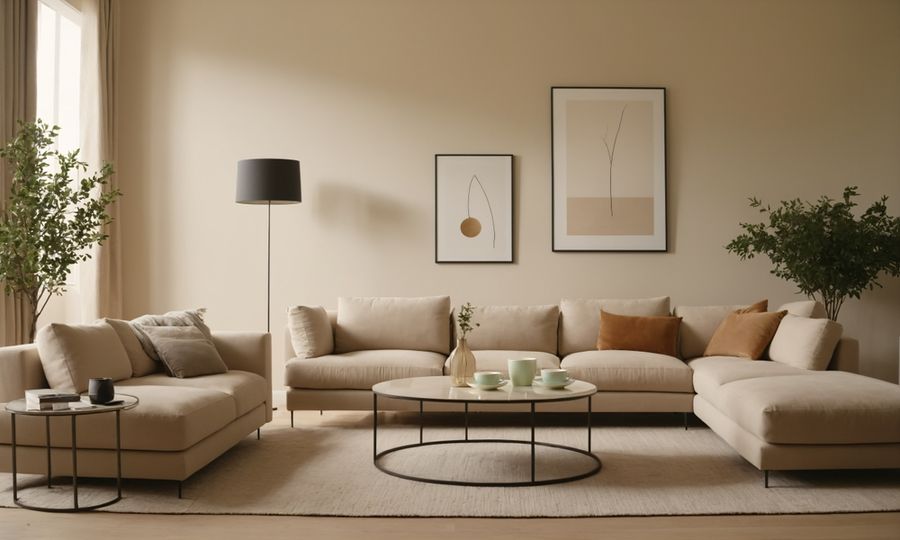
A living room layout can make the difference between a room everyone naturally gathers in and one that nobody quite uses. The right arrangement balances comfort, conversation, traffic flow, and visual interest. The wrong one leaves people walking through the seating area, talking across awkward distances, or avoiding the room altogether. With a few designer principles, even an oddly shaped or oversized living room can be turned into a space that actually works.
Start by Defining the Room's Purpose
Before moving any furniture, decide what the room actually needs to do. Some living rooms are built for conversation. Others center around the TV. Some have to handle both, plus a reading corner and a play area.
The way you'll use the room every day determines everything else: how seating gets arranged, where the focal point lives, and what kind of furniture pieces belong in the space. A living room with no defined purpose tends to try to do too many things and accomplish none of them well.
Identify the Focal Point
Every successful living room has a focal point: a fireplace, a large window with a view, a piece of art, or the TV. Once you know what the focal point is, arrange the seating to face it.
Avoid trying to give a room two competing focal points, like a fireplace on one wall and a TV on the other. Pick one as the primary, and either build the layout around it or place the secondary element above or beside the main focal point so the seating doesn't have to choose.
Float Your Furniture Away From the Walls
The single biggest layout mistake is pushing every piece of furniture against the walls. Apartment Therapy notes that floating furniture, even just pulling a sofa a few inches forward, creates more intimate, conversation-friendly zones and makes the room feel more designed.
In larger rooms, floating two sofas facing each other in the center creates a defined seating area while leaving the perimeter free for walking. Even small rooms benefit from a slight pull-away, which adds depth and breathing room.
Get Conversation Distance Right
For conversation to feel natural, seating should be close enough that you don't have to project your voice but far enough that nobody feels crowded. Designers generally recommend 6 to 8 feet between facing seating pieces.
The ideal distance between a sofa and the coffee table in front of it is about 16 to 18 inches. Closer than that and reaching for a drink feels cramped. If you go farther than that, you'll have to lean to set anything down. Side chairs work best when angled 30 to 45 degrees toward the sofa rather than positioned dead parallel, which feels more like a waiting room than a living room.
Use the Rug to Anchor the Layout
A properly sized rug ties a layout together. Houzz design experts recommend rugs large enough that at least the front legs of the sofa and any chairs rest on it. For most living rooms, that means an 8-by-10 or 9-by-12 rug.
A rug too small leaves furniture floating awkwardly and visually shrinks the seating area. The rug should also leave roughly 18 inches of bare floor around the perimeter of the room for proper proportion.
Plan Clear Walking Paths
Every living room needs at least one clear path through it that doesn't cut through the seating area. Living Etc. recommends leaving a minimum of 36 inches of clearance for primary walkways.
If you have to navigate around a coffee table or squeeze between a chair and a wall to get to the kitchen, the layout is fighting the room. Map out the natural traffic from doorway to doorway first, then place furniture so it never blocks those routes.
Add Surfaces Within Easy Reach
Functional living rooms have surfaces nearby for drinks, books, lamps, and remote controls. Every seat should have access to a surface, whether through a coffee table, side table, console, or ottoman with a tray on top.
Without these, the sofa quickly becomes covered in clutter, and guests have nowhere to set anything. Multi-purpose pieces like storage ottomans and nesting tables earn their keep in tight spaces.
Layer Lighting at Different Heights
A single overhead fixture rarely makes a living room feel like a place you actually want to spend time in. Layered lighting at different heights, from a chandelier or recessed lights overhead to floor lamps, table lamps, and even sconces, creates the warm, flexible glow that's hard to capture any other way.
Also consider adding dimmers to as many fixtures as possible so you can adjust the brightness for different times of day and activities.
Build in Smart Storage Without Crowding
A living room that doubles as a media room, library, or kid space needs storage that fits the lifestyle. Built-in shelving on either side of a fireplace, a long credenza along one wall, or a coffee table with hidden storage all give the room a place to put everything that lives there.
Just be sure to avoid filling every available surface with bins and baskets. Edited storage feels designed. Overstuffed storage, on the other hand, feels chaotic.
A Layout That Actually Works
A functional living room balances clear sightlines, comfortable conversation, easy traffic flow, and enough surfaces and storage for daily life. The exact arrangement depends on the shape of the room, the focal point you're working around, and the way you want to use the space.
Most layouts come together once you commit to one focal point, float your seating, anchor it with the right rug, and protect a clear walking path from end to end. The room you actually want to live in is usually one good rearrangement away.