

Low ceilings are one of the most common quirks in older homes, mid-century houses, and basement-level rooms. They can make a space feel cramped. Fortunately, a handful of designer tricks can dramatically change how the room reads. The key is using paint, lighting, furniture, and lines to draw the eye upward rather than across. Most of the techniques cost very little and can be done in a single afternoon, with surprisingly dramatic results.
Hang Curtains High and to the Floor
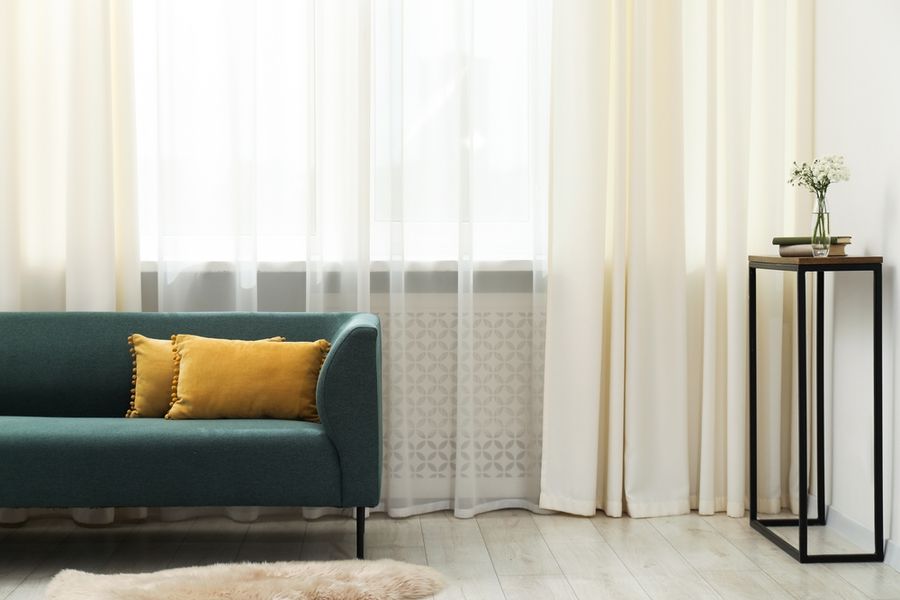
The single biggest trick for making ceilings feel higher is mounting your curtain rods just below the ceiling rather than right above the window frame. Hang the curtains all the way to the floor so they create a continuous vertical line from ceiling to floor.
Most design experts agree that this is one of the most powerful illusions in interior design. The longer those vertical lines run uninterrupted, the taller the room feels. Avoid valances, which slice the visual line and shorten the wall.
Paint the Ceiling Light or Match the Walls
A bright white or very light ceiling reflects more light and makes the boundary between wall and ceiling feel softer, which visually pushes the ceiling up. A high-gloss or semi-gloss finish on the ceiling can amplify the effect by bouncing even more light around the room.
Alternatively, painting the ceiling and walls the same color, especially in soft, light shades, creates a monochromatic effect that blurs the line between the two. Without a clear edge to focus on, the eye reads the room as taller. The mistake to avoid is painting the ceiling a sharply darker tone than the walls, which drops the perceived height significantly and visually divides the room horizontally.
Use Vertical Lines to Pull the Eye Up
Anything vertical in a room pulls the eye upward and adds the illusion of height. Homes & Gardens recommends using vertical paneling, board-and-batten, vertical wallpaper patterns, or thin, widely spaced vertical stripes to reinforce a sense of upward movement.
Tall, narrow mirrors and floor-to-ceiling drapery panels do the same. The trick is consistency: a few vertical elements working together pull the eye much more than a single one trying to do all the work alone.
Choose Low-Profile Furniture
Low ceilings appear lower when furniture is bulky and tall. Mid-century-style furniture, with its lower profiles, exposed legs, and more horizontal silhouettes, actually helps low-ceilinged rooms feel taller because more of the wall and ceiling stay visible above the seating.
A sofa with sleek, raised legs reads better than a deep, stuffed loveseat that sits flush to the floor. Avoid massive headboards in the bedroom, towering armoires, and heavy upholstered chairs that swallow the space and crowd the vertical room above them.
Skip Pendants in Favor of Flush Mounts
Hanging pendants and chandeliers visually shorten a room with low ceilings. Flush-mount and semi-flush fixtures stay tight against the ceiling, leaving the vertical space below them clear.
Houzz notes that flush mounts maximize perceived height while still providing plenty of light. If a hanging fixture feels essential over a dining table or island, choose one with a small profile and a hanging height of no less than 30 to 36 inches above the surface.
Add Tall, Narrow Mirrors
Mirrors also expand a room visually, but the most useful kind for low ceilings is the tall, narrow leaner that stretches almost from floor to near-ceiling. The vertical orientation reinforces height while reflecting light deeper into the space.
Lean a tall mirror against a wall or hang one with the top close to the ceiling. Avoid wide horizontal mirrors, which reinforce the squat shape of the room rather than counteract it.
Hang Art Vertically
The orientation of artwork matters more than people expect. Two or three pieces stacked vertically, or a single tall portrait-orientation piece, pull the eye upward in the same way as vertical curtains.
Avoid hanging multiple pieces of art in a horizontal line at chair height, which reinforces the room's width but does nothing for its height. A vertical gallery wall with frames stacked one above the other is especially effective in tight spaces.
Build In Floor-to-Ceiling Storage
Custom bookshelves, cabinets, or built-ins that extend all the way to the ceiling also lift the eye and make the entire wall feel taller. The same shelving stopped halfway up actually makes the space feel shorter, since it visually establishes a horizontal break partway up the wall.
If full built-ins aren't possible, freestanding bookshelves stacked to the ceiling or topped with baskets that fill the gap above give the same effect with much less commitment. The same logic applies to wall-mounted cabinetry in kitchens. Cabinets running to the ceiling, sometimes called full-height cabinets, instantly read taller than upper cabinets that stop a foot or two below the ceiling.
Keep Sight Lines and Lighting Clean
Clutter at eye level, busy patterns at the ceiling, and heavy furniture all crowd a low-ceilinged room. Keep tabletops and shelves edited, choose a single color story for the walls, and skip ceiling medallions or heavy crown molding that draw attention to the height of the room.
Rich lighting from multiple sources, including floor and table lamps, also keeps the eye moving around the space rather than fixed on the ceiling line.
Small Tricks That Add Real Height
A combination of high-mounted curtains, light ceilings, vertical accents, and low-profile furniture can dramatically change the way a low-ceilinged room feels. None of these tricks require structural changes, and most can be done in a weekend with paint, fabric, and a bit of rearranging. The room's actual measurements may not change, but the way it feels to walk into and live in absolutely will.